 DPP Knowledge Base
Digital Product Passports, explained
Self-contained articles on what the EU requires, how the open standards fit together, and how OwnYourData's free tools put it into practice. Each article stands on its own and says when it was last reviewed.
Basics
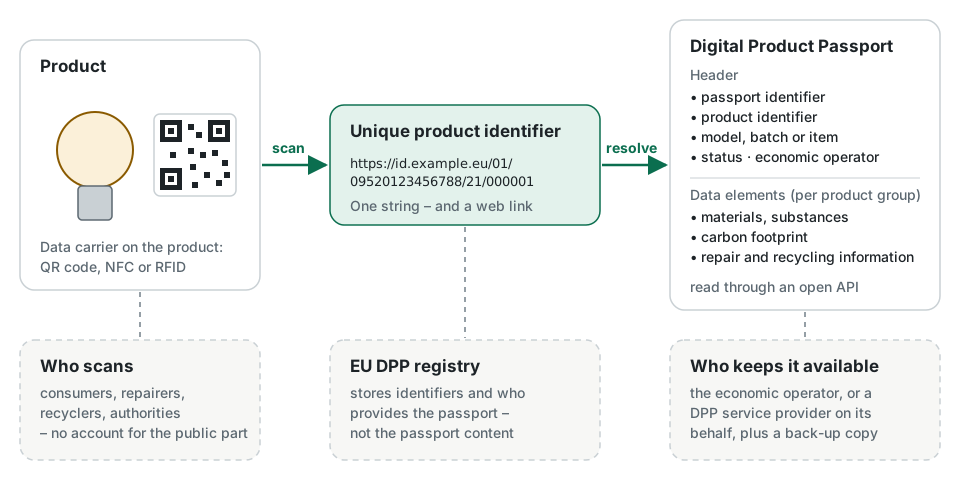
What is a Digital Product Passport?
A digital record that travels with a product, reachable by scanning the product itself. What the EU requires, what a passport contains, who reads it and when it becomes mandatory.
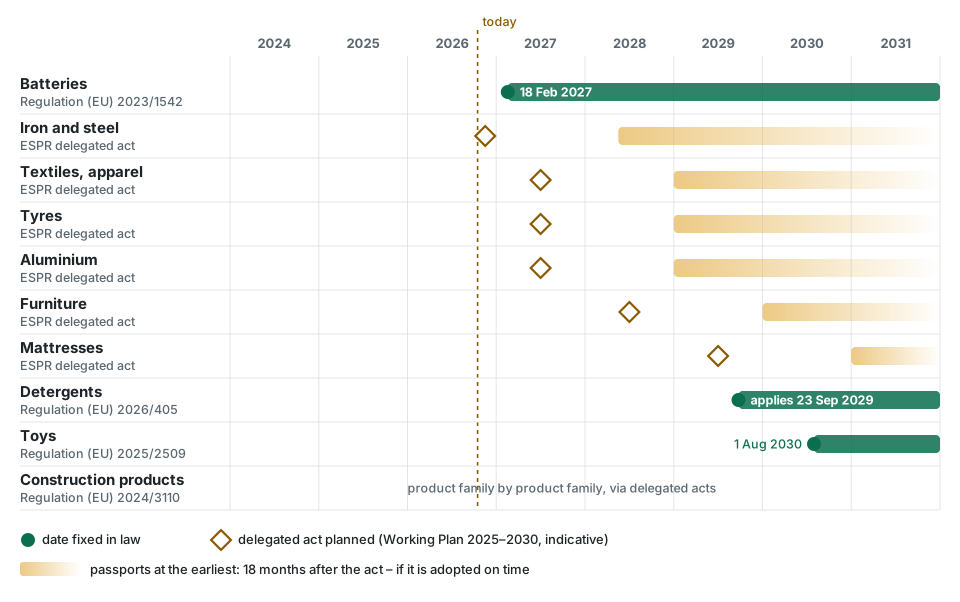
Roadmap: when Digital Product Passports become mandatory
Batteries come first, then one product group after another. Which groups are planned when, what has been decided so far, and how a passport obligation comes about – as of October 2026.
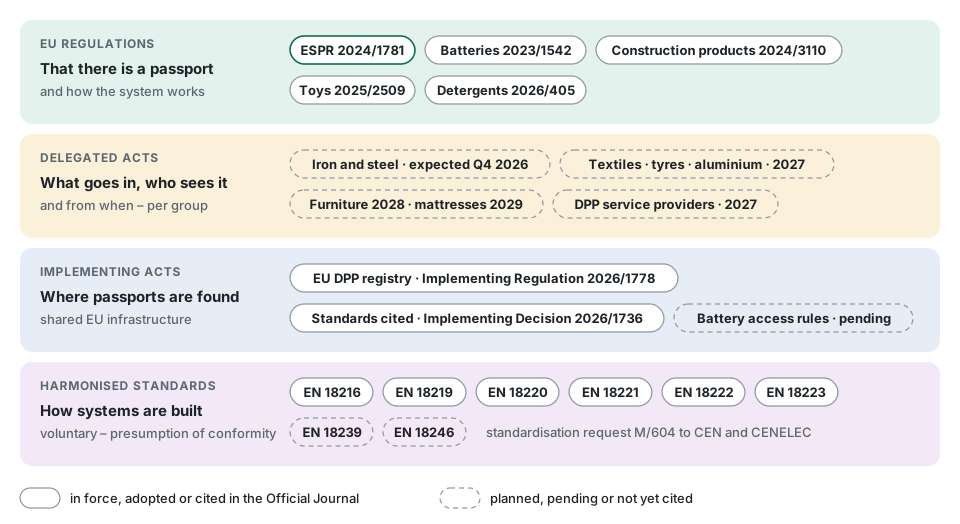
Laws and standards behind the Digital Product Passport
Which EU regulations require passports, what delegated and implementing acts add, and which eight European standards say how passport systems are built – with the state of each as of October 2026.
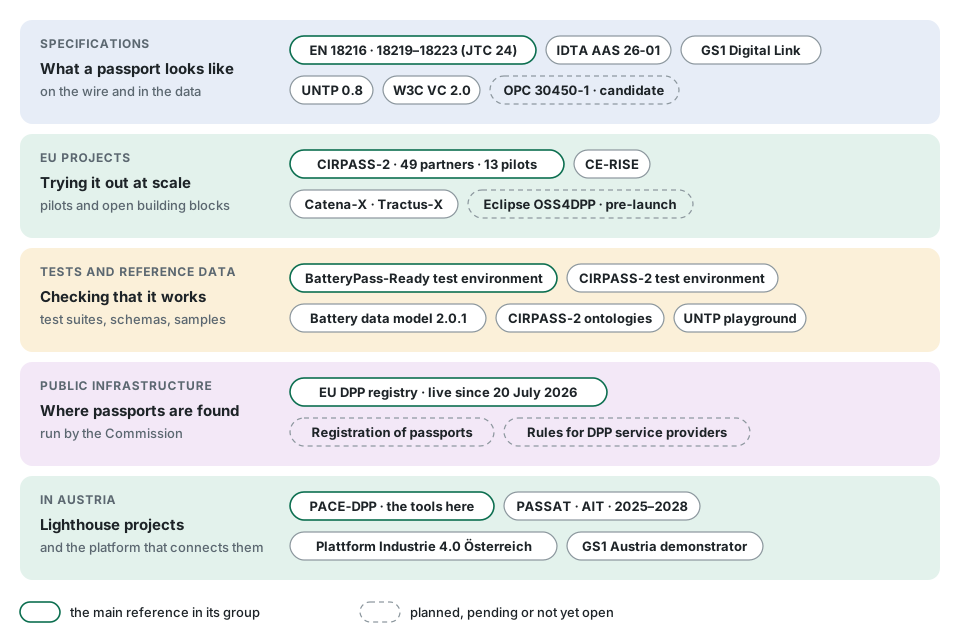
Research projects and initiatives around the Digital Product Passport
The laws say that there will be passports, and the standards say how they are built. Around them, EU projects, standards bodies, industry alliances and national lighthouse projects test the passport in practice and publish what others can reuse – test environments, data models, ontologies and examples. Who they are, what they offer, and where to start.
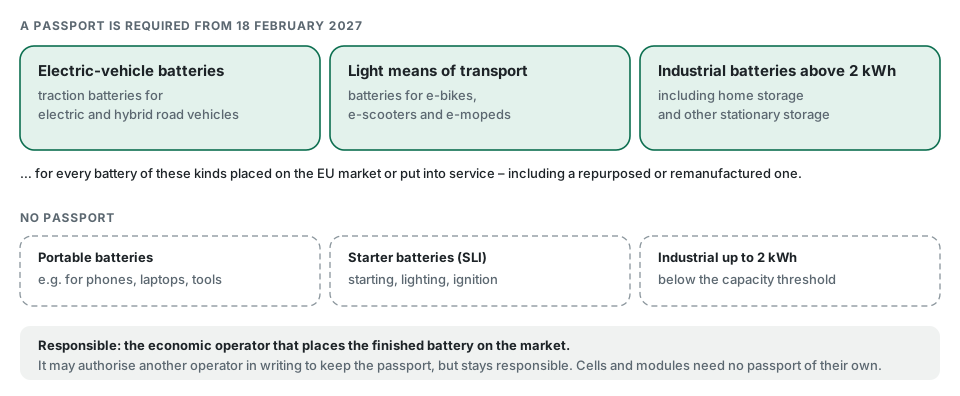
Battery passport: what you need by 18 February 2027
From 18 February 2027, every electric-vehicle battery, every battery for light means of transport and every industrial battery above 2 kWh placed on the EU market needs a digital passport. Which batteries are covered, who is responsible, what goes in, who may read what – and what is still undecided.
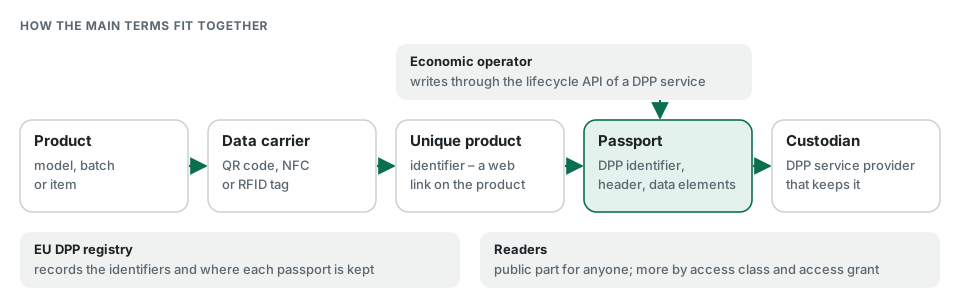
Glossary: Digital Product Passport terms
The terms that come up again and again around Digital Product Passports – from access class to working plan – each explained in a few sentences, with a link to the article that goes deeper.
Concepts
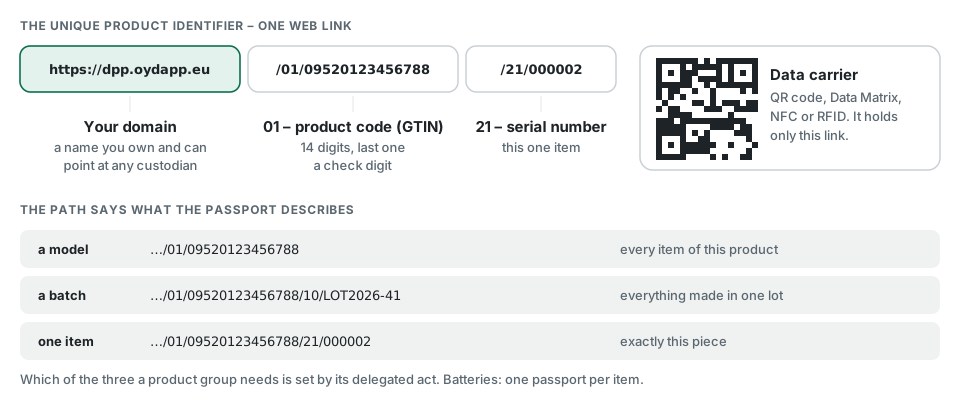
QR code, GS1 Digital Link and unique identifiers
The link on the product is the one part of a Digital Product Passport that can never be changed once it is printed. What it consists of, which identifier schemes the standards allow, where the data carrier goes – and how to choose so that the link outlives your service provider.
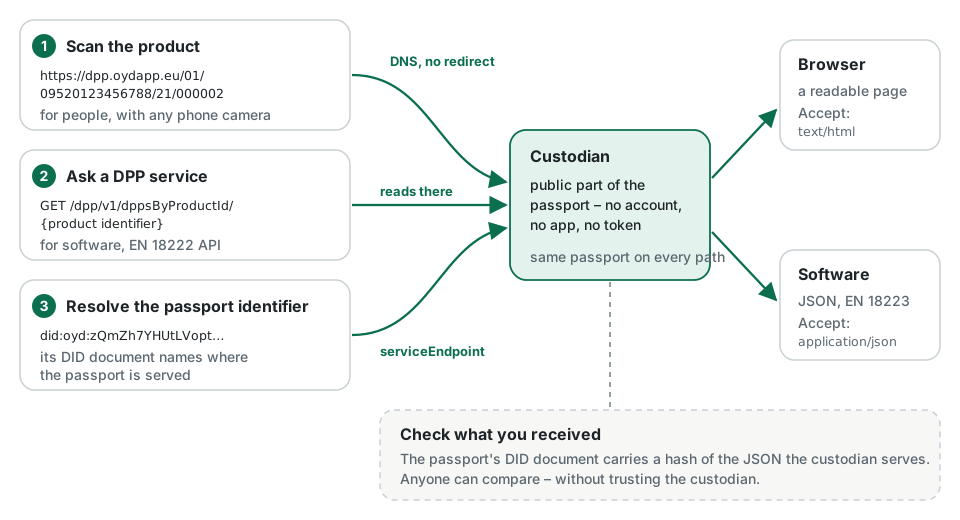
Public availability: from QR code to passport
How anyone gets from the code on a product to its passport – without an account or an app – why the link on the product never has to change, and how a reader can check that the data is genuine.
Role-based access to passport data
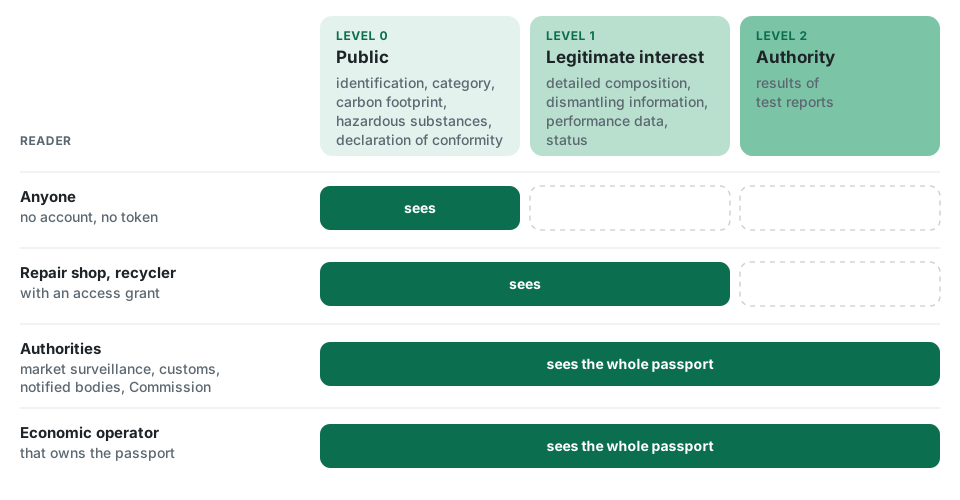
Not every field of a passport is for everyone. How the DPP Service classifies passport data, who may read what, how access is granted and revoked, and how every access is logged.
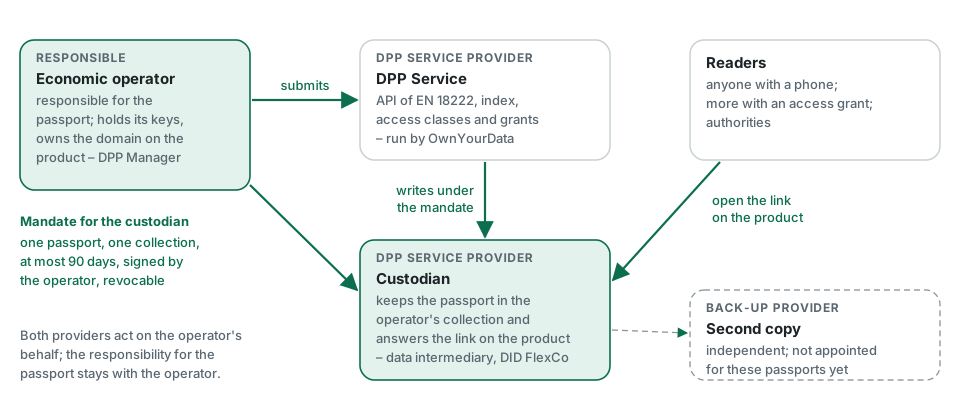
Who keeps the passport? Custodians, data intermediaries and back-up copies
A passport has to be readable for the life of the product – often longer than the company that made it, and certainly longer than any contract with a service provider. Who holds the data, on what authority, what a back-up copy is for, and what happens when a provider stops.
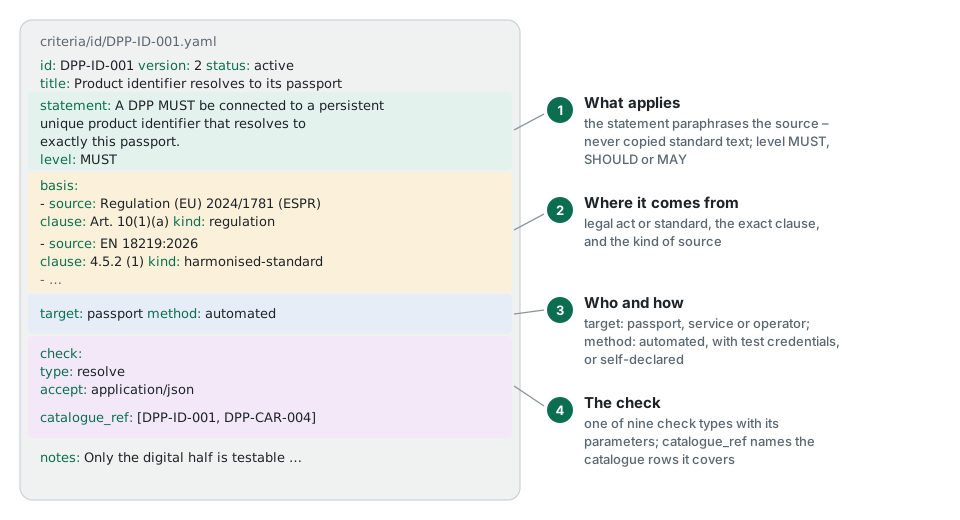
The DPP criteria catalogue: requirements you can check
How the open repository dpp-criteria turns the ESPR and the harmonised standards into machine-checkable criteria – what a criterion contains, which tool checks it, where each requirement comes from, and how anyone can contribute.
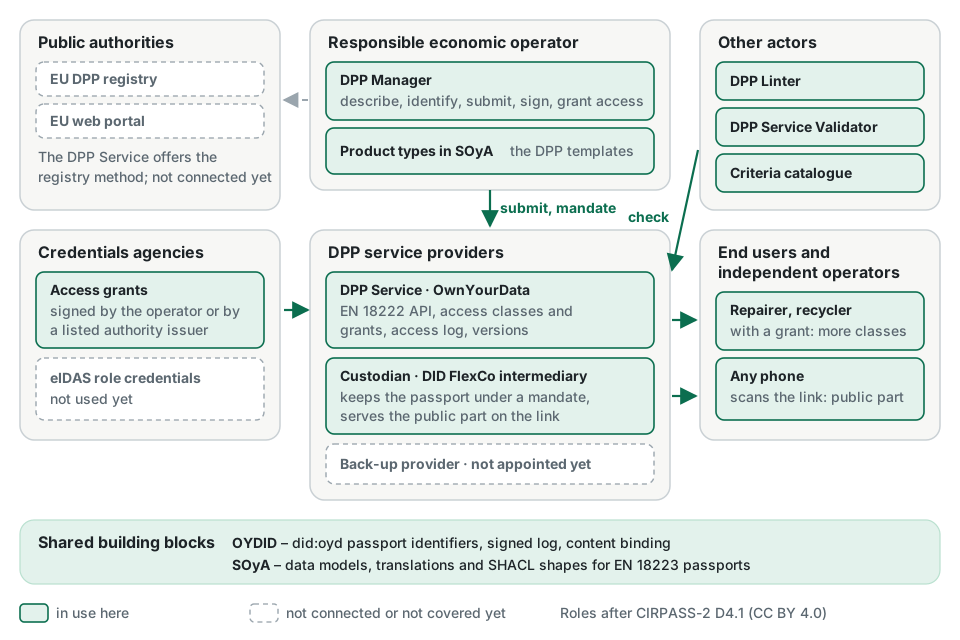
CIRPASS-2 reference architecture: where our tools fit
The EU project CIRPASS-2 describes what a complete DPP system consists of – roles, building blocks and 25 recommendations. This article shows which roles our tools take in it, which recommendations they follow, where they take another route and what is still missing.
Tools
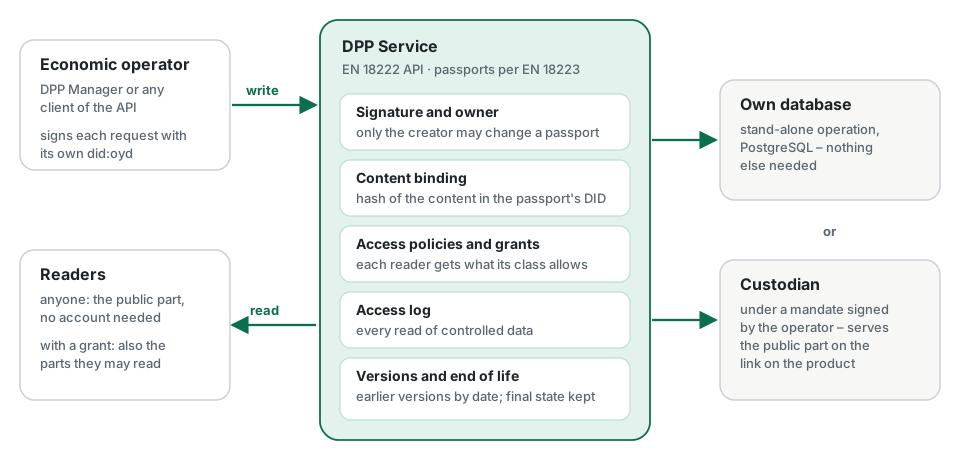
DPP Service: an open implementation of the EN 18222 passport API
The open-source service that stores, versions and serves Digital Product Passports through the standard lifecycle API – with signed writes, content binding, role-based access and an access log. Use our public instance or run your own.
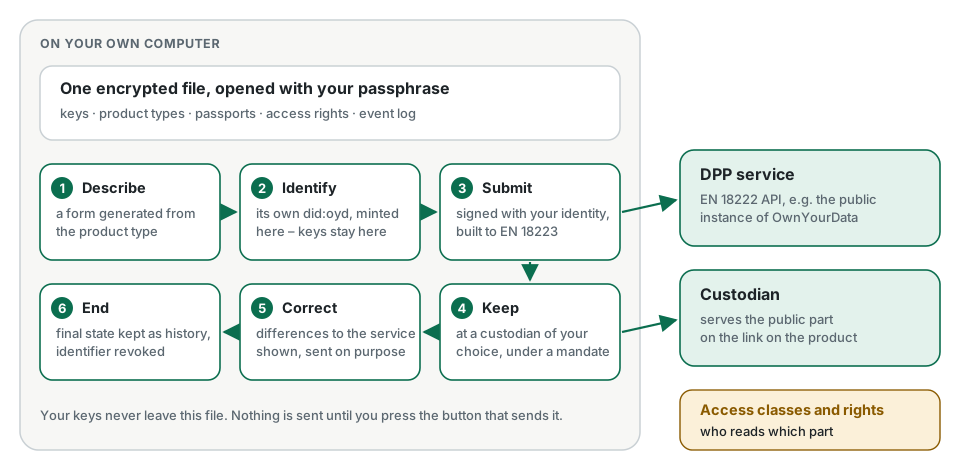
DPP Manager: create and manage passports on your own computer
A free application for economic operators. Describe products, issue passports, keep them at a custodian of your choice and decide who reads what – with your keys and data in one encrypted file on your own machine.
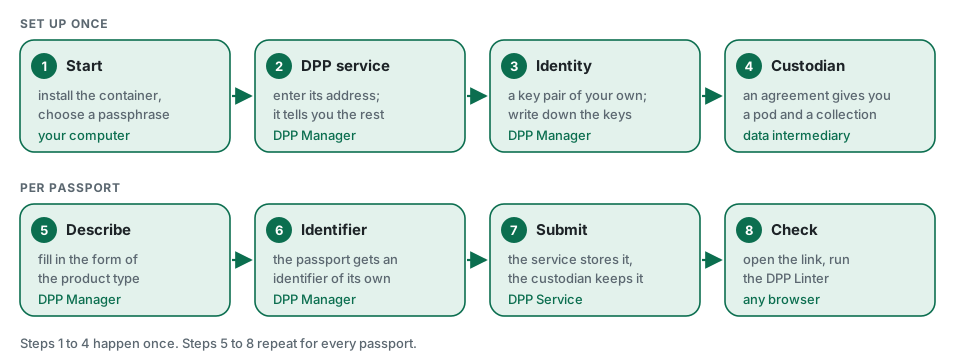
Getting started: your first passport
From an empty computer to a published Digital Product Passport that anyone can open – with the DPP Manager, the DPP Service of OwnYourData and a custodian at a data intermediary. Eight steps, one screenshot each.
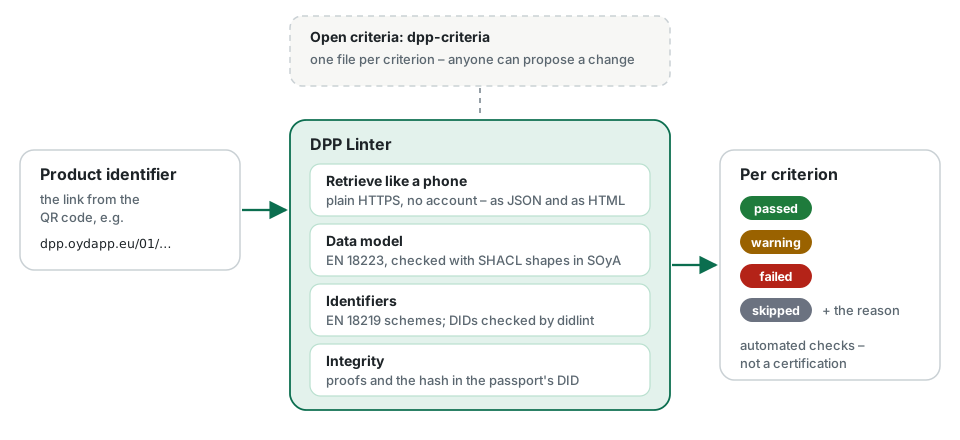
DPP Linter: check any passport against the standards
Enter the link from a product's QR code and see, criterion by criterion, whether its passport can be read, follows the EN 18223 data model, uses valid identifiers and can be checked for integrity. Free, open source, no account.
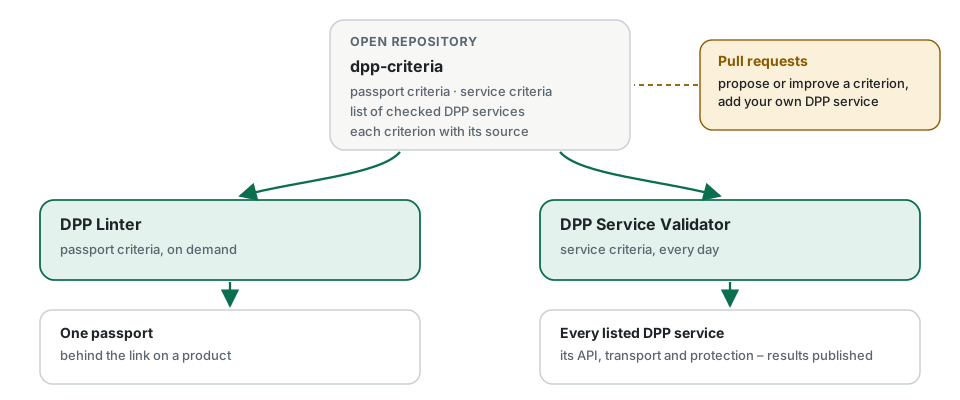
DPP Service Validator: daily, public checks of DPP services
Every listed DPP service is checked every day against open criteria – transport security, the EN 18222 API and protection against unauthorised changes – and the results are published for everyone to see.